Weeds are the last thing that you need growing on your to-do list! But tackling weeds effectively means knowing what you’re dealing with. You can’t expect effective control if you haven’t properly diagnosed what’s growing in your lawn.
Two of the weeds that are commonly mistaken for one another but require completely different approaches are nutsedge and crabgrass.
In this article, we’ll help you identify nutsedge vs. crabgrass and also talk about how you can take the right steps to getting rid of them.
Jump To:
Nutsedge vs. Crabgrass: What's the Difference?
What Types of Nutsedge Could Be Growing in Your Lawn?
How to Get Rid of Nutsedge and Crabgrass
Why You Shouldn't Treat Nutsedge and Crabgrass the Same Way
Preventing Crabgrass and Nutsedge From Taking Over Your Lawn
FAQs
How a Professional Helps Identify and Control Stubborn Lawn Weeds
Nutsedge vs. Crabgrass: What's the Difference?
Both nutsedge and crabgrass are aggressive weeds that can be tough to control. But there are some key differences between these two invaders.
For one, nutsedge is not actually a grassy weed (even though it sure looks like one!). Nutsedge is actually part of the sedge family. To make it even more confusing, nutsedge is commonly referred to as “nutgrass.”
Let’s look at some of the other differences between nutsedge vs. crabgrass to help you tell them apart.
Lifecycles
Another big difference between nutsedge and crabgrass is their lifecycles. Although they are both summer weeds that thrive in the hot sun, they have different lifecycles and emerge at different times.
In our region, crabgrass tends to germinate in late March through April, when soil temperatures reach around 55 degrees. Active growth is usually May through August. But nutsedge in the lawn generally starts growing after crabgrass has already sprouted. It actively grows from June through August. That means earlier growth is more likely to be crabgrass.
Appearance
Once these weeds reach maturity, they do have different appearances. Nutsedge is really only a crabgrass lookalike when the plants are young.
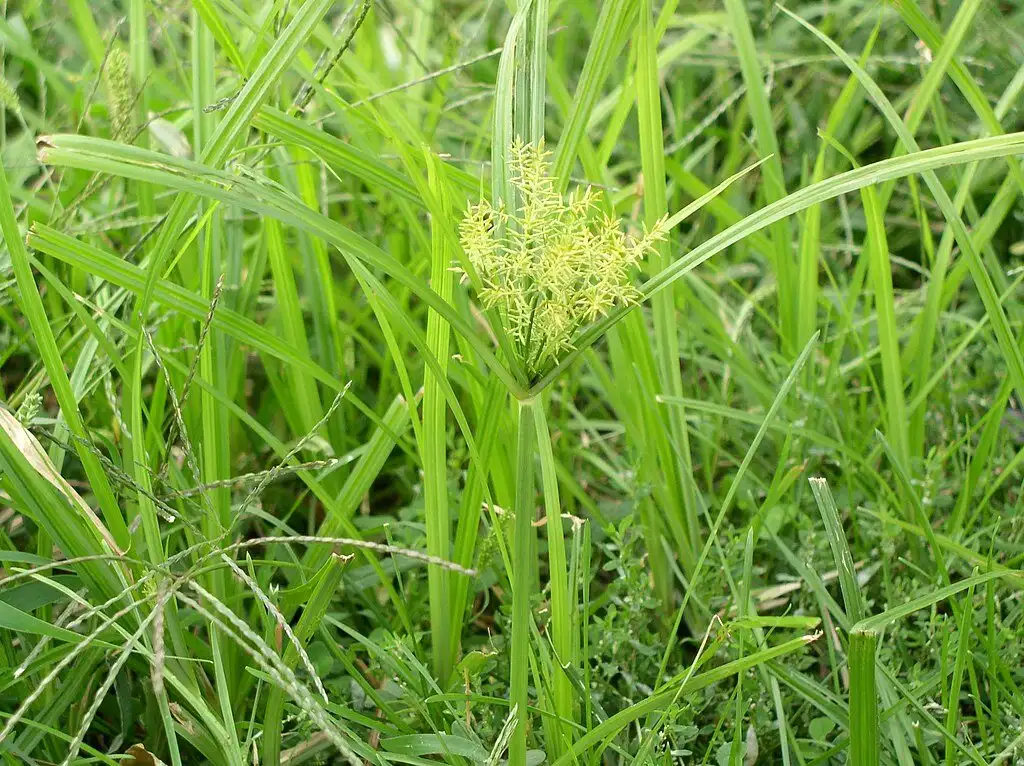
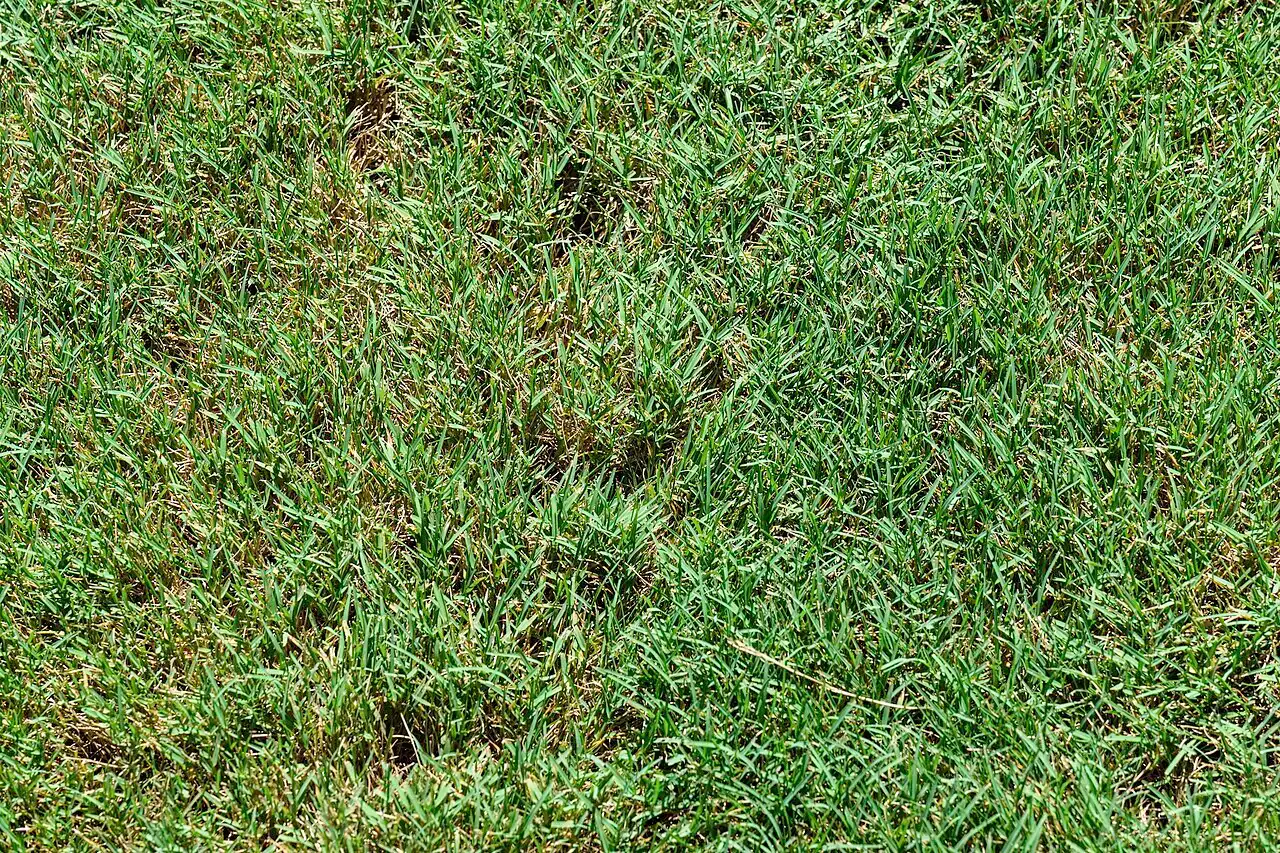
A key identifying feature is color. Nutsedge is a much brighter, almost neon green color. This is different from crabgrass which is duller and almost bluish-green. At a quick glance they might look similar. But nutsedge tends to stand out from the rest of the lawn a lot more than crabgrass will.
Growth habits
Nutsedge also tends to really stick out from the rest of the lawn both because of its bright coloring but also because it grows so much faster than desired turfgrass. Nutsedge can grow 3 to 5 times faster than regular turfgrass, so it’s almost always identifiable because it sticks out so much.
As many of us turfgrass experts learned in school, there’s also the saying “sedges have edges.” If you look closely at the nutsedge in the lawn, you’ll notice it has triangular stems. If you were to roll an individual blade between your fingers, you can feel those edges. This is different from crabgrass which is more rounded or flattened.
What Types of Nutsedge Could Be Growing in Your Lawn?
While there are different types of nutsedge out there, the species that dominates our region is Yellow Nutsedge.
In general, nutsedge grows via underground spreading, which is a big part of the reason it’s so difficult to deal with. The weed’s underground nutlets (also called “tubers”) store energy. That means even if you pull or mow it down, the underground nutlets will just send up new shoots.
You could have an extensive underground system of nutsedge growing beneath your feet. That’s why it often just keeps coming back.
It’s a lot like glitter in that way! Let’s be real…nobody really wants glitter to end up in their house because it’s almost impossible to get rid of. Sweeping up glitter just seems to spread it around. The same can be true when there’s nutsedge in the lawn. That’s why you need targeted control to truly tackle this persistent weed.
How to Get Rid of Nutsedge and Crabgrass
Crabgrass and nutsedge require two entirely different approaches to get rid of them. Let’s look at both.
How to get rid of nutsedge
Nutsedge requires a specialty control that is specifically formulated to target this weed. Because it’s an aggressive grower, it’s not uncommon for it to require repeated controls.
There are also steps you can take to make your lawn less hospitable to nutsedge growth. Since nutsedge tends to perform well in overly saturated soil, you’ll want to pay attention to any correctable problems like an irrigation leak or overwatering. Compacted soil can also struggle to drain well, so keeping up with lawn aeration can play an important role, too.
Of course, nutsedge does tend to be one of those weeds that will “find a way,” so changing lawn conditions alone won’t be enough. You’ll also want to make sure that you’re investing in specialty controls.
How to get rid of crabgrass
Getting rid of crabgrass is different. With crabgrass control, the focus should be on pre-emergents that help prevent crabgrass from germinating in the first place.
Of course, timing is everything – you’ve got to apply them before the seeds germinate. In Indiana, that usually means sometime in the early spring (think soil temps around 55 degrees).
For any breakthrough, or for lawns that missed the germination window, there are also post-emergent controls that work on crabgrass.
Crabgrass is stubborn. So at Shades of Green, we take a proactive, science-backed approach to crabgrass treatment and overall lawn health. We use late fall-applied pre-emergent products as part of our crabgrass control program. This ensures that your lawn has what it needs to fight crabgrass as soon as the spring warm-up starts the germination process.
Why You Shouldn't Treat Nutsedge and Crabgrass the Same Way
These weeds might have similarities, but at the end of the day, you simply can’t treat nutsedge and crabgrass the same way. These are two very different weeds with entirely separate lifecycles and growth habits. While we wish there was a preventative product that worked on nutsedge (like there is for crabgrass), that’s simply not the case.
Crabgrass control needs to focus on preventing germination through pre-emergent products and targeting any breakthrough with post-emergent controls.
And nutsedge control requires specialty controls that target this specific weed.
Unfortunately, these are entirely different approaches. That’s why it’s so important to choose a lawn care company that takes a comprehensive and varied approach to attacking weeds. You’re simply not going to have great success with a company that tries to take a cookie-cutter approach to all weeds.
Preventing Crabgrass and Nutsedge From Taking Over Your Lawn
As we mentioned, preventing crabgrass starts with pre-emergent products that form a barrier and stops germination in the first place. Unfortunately, there are no preventative products that can stop nutsedge from growing.
However, the best way to take steps toward preventing weeds in general is to practice good lawn care habits. When thick and healthy turf is able to grow and thrive, it will play a role in choking out unwanted weed growth.
That’s not to say that you’ll never have problems with weeds. As we’ve mentioned, aggressive growers often “find a way.” But a lawn that is already thriving is going to have a lot less serious issue with weeds than one that is filled with bare spots where weeds can creep in without competition.
FAQs
Can crabgrass and nutsedge grow in the same lawn at the same time?
Yes, crabgrass and nutsedge can grow in the same lawn at the same time. This is one of the reasons why homeowners sometimes tend to mix them up. If you have thin or stressed turf, you might be more likely to have weed pressure in general. Bare spots give both weeds room to grow without competition from healthy turf.
Can you prevent nutsedge with the same pre-emergent used for crabgrass?
No, you cannot prevent nutsedge with the same pre-emergent products used for crabgrass. Nutsedge requires specialty control.
Why does nutsedge grow faster than the rest of my grass after mowing?
Nutsedge has a much faster growth rate than grass, allowing it to quickly pass grass in height. This becomes particularly noticeable after a mow session that levels everything out to the same height. After a couple of days, you might see nutsedge growing above the rest of your lawn.
What other lawn weeds are commonly mistaken for crabgrass in Indiana?
Some of the lawn weeds mistaken for crabgrass include goosegrass, foxtail, and bermudagrass.
Will crabgrass and nutsedge die naturally during an Indiana winter?
Yes, both can die back naturally during winter but there is an important distinction. While crabgrass will die completely at the end of its growing season, nutsedge can die above ground and remain alive underground.
How a Professional Helps Identify and Control Stubborn Lawn Weeds
If you’ve been fighting weeds like nutsedge and crabgrass year after year, without feeling like you’re getting anywhere, don’t beat yourself up. These weeds are persistent, sneaky, and love to hang out where it is not invited. But with the right plan, the right timing, and a little help from the pros, you can reclaim your lawn.
That’s exactly why Shades of Green exists. It’s quite literally our job to understand all the science, timing, and techniques that go into growing a healthy, vibrant lawn, as well as everything involved in tackling whatever weeds might be growing. We provide lawn weed control in Lafayette and Nearby Areas. We also provide services in Carmel, Noblesville, Westfield, and Zionsville. We also offer all of the lawn care services needed to help you grow healthy turf.
At Shades of Green, you can count on us to provide helpful advice and recommendations while also supporting your lawn with the treatments it needs. That means more time enjoying your lawn and less time stressing about it.
Ready to get your lawn on track this season? Get started by filling out our contact form for your quote.
Image Source: crabgrass