When your lawn isn’t performing like it should, you might be inclined to wonder if your lawn care provider is doing something wrong. While that can certainly happen, there are also lawn care mistakes that homeowners make themselves that wind up hurting the lawn.
In this article, we’ll call out some of the most common lawn care mistakes so that you can take steps to avoid them.
Jump To:
Mistake #1: Mowing Your Grass Too Short
Mistake #2: Letting Your Grass Get Too Tall Between Mowings
Mistake #3: Watering Too Frequently or Incorrectly
Mistake #4: Ignoring Soil and Compaction Problems
Mistake #5: Applying Fertilizer Without Understanding What Your Lawn Needs
Mistake #6: Treating Every Weed the Same Way
Mistake #7: Ignoring Thin Grass and Bare Spots
Mistake #8: Waiting Until Lawn Problems Become Severe
FAQs
Get Professional Help Caring for Your Indiana Lawn
Mistake #1: Mowing Your Grass Too Short
There’s no question that the mowing height of your grass can impact its health. In fact, it can be one of the most significant influences on the entire health of the lawn. One of the biggest lawn mistakes that people make with mowing height is cutting the lawn too short.
When you cut the lawn too short, the plant shifts all of its energy into rebuilding the leaf instead of strengthening the roots. With consistent mowing at the proper height, your turf can push roots deeper into the soil, making it better at accessing nutrients, staying green through dry stretches, and holding up to everyday use.
Mistake #2: Letting Your Grass Get Too Tall Between Mowings
It’s not just the cut height that matters but how much of the grass you’re cutting at one time. That’s because you want to make sure that you’re following the “one-third rule”, which is to never remove more than one-third of the grass blade at a time. This protects your turf from stress and keeps it growing thick and healthy.
During the most active periods of growth, this likely means cutting the grass weekly. Just like cutting the grass too short is stressful for the lawn, so is cutting too much of the grass in a single mow. It can shock the plant and affect its growth.
Mistake #3: Watering Too Frequently or Incorrectly
Proper lawn care also includes proper watering. When you water the lawn too much or too little, it can lead to trouble.
For one, overwatering the lawn, especially on a humid day, can increase the likelihood of lawn disease. Homeowners are also surprised to learn that too much water can drown the grass roots. This happens when water fills pockets of air and starts to suffocate the roots.
But underwatering the lawn isn’t good either. When grass doesn’t receive ample water, it can struggle to grow. Frequent and shallow watering can cause grass roots to stay near the surface as opposed to growing deep into the soil like they ought to. This can make your lawn much more susceptible to drought.
In the heat of the summer, the best time to water the lawn is in the morning, so that there is ample time to absorb moisture before the sun evaporates it.
If you have an automatic sprinkler system, make sure it is adjusted and inspected before summer hits. You don’t want it watering during a thunderstorm or skipping your lawn during a heat wave. Check that everything is working properly and tweak your settings as the weather changes.
Often, watering mistakes end up being the result of failing to change a sprinkler system, such as a seasonal change. We’ve encountered situations where the system was still putting out more water than it should be because the season changed.
Mistake #4: Ignoring Soil and Compaction Problems
Soil compaction is a lawn problem that can go quietly undetected. But ignoring it can turn into a big lawn mistake. That’s because when soil is compacted, oxygen, nutrients, and water might not make it down to the root zone.
When soil is compacted, your grass may start to show signs of stress like thinning, discoloration, poor drainage, or even patches of bare ground. But the real issue is happening below the surface, where roots are struggling to push through hard and compressed soil.
Unfortunately, our heavy clay soils here in Indiana are more prone to compaction. That’s why we recommend annual lawn aeration. Aerating the lawn will help break up compaction and begin to correct some of the issues that you might be seeing.
Mistake #5: Applying Fertilizer Without Understanding What Your Lawn Needs
Fertilizer can be confusing. First you have to make sure that you’re choosing the right product, then you need to apply it at the right rate and timing. There can be a lot of factors that impact the effectiveness. Plus, applying too much fertilizer or using the wrong formulation can contribute to lawn damage.
A big lawn care mistake that we see is that people assume fertilizing is a one-and-done task. Instead, it should be a year-round investment. Fertilizing correctly helps your grass recover from seasonal stresses, builds strong roots, keeps weeds under control and sets your lawn up for success.
You can remove the guesswork when you hire a pro. At Shades of Green, we customize every fertilizer application to fit your lawn’s needs and Indiana’s ever-changing conditions.
Mistake #6: Treating Every Weed the Same Way
Different weeds have different growth cycles, root systems, and environmental preferences, which means that a treatment which works for one weed might not work for another. That’s why treating all weeds the same way can set you up for disappointing results. Applying the wrong weed control product or treating at the wrong time can allow weeds to grow and spread, wasting both your time and money.
This is where turning to a lawn care pro who can deploy an arsenal of different weed control products is going to be your best chance at success. Lawn care pros know exactly when and how to tackle weeds for maximum impact. This customized approach helps improve weed control while protecting desirable grass in the process.
Mistake #7: Ignoring Thin Grass and Bare Spots
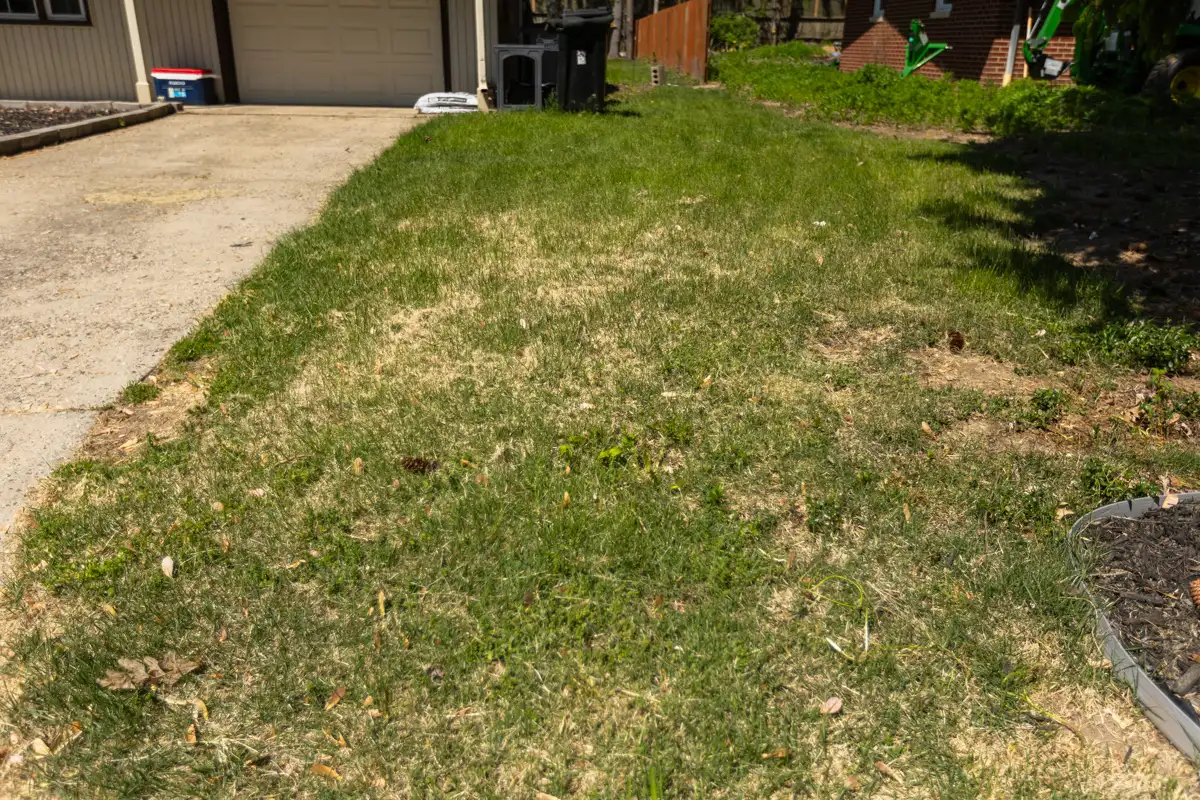
A couple of thin spots or bare areas might not seem like that big of a deal. But it’s indicating that you have a problem which might only continue to get bigger.
Often, thin spots and bare areas become most noticeable following the summer, when grass has been through the wringer in terms of heat and stress.
But a lawn mistake we see in general is overlooking fall lawn care. We get it…you aren’t spending the same amount of time outside and you’re just not as focused on your lawn. However, you’re going to do yourself a disservice in the long run if you ignore the fall.
Those thin areas that become evident in the fall can be successfully addressed with lawn aeration and overseeding.
Mistake #8: Waiting Until Lawn Problems Become Severe
Waiting until lawn problems become severe instead of addressing them earlier is a common lawn mistake that can ultimately lead to more extensive damage and costly repairs.
Thin areas, mild discoloration, or some weeds can all gradually develop into widespread turf damage. Often these problems are indicating an untreated issue that needs to be addressed. Whether it’s soil compaction, pH issues, a disease brewing, or a pest infestation, you want to get any lawn problems under control early.
FAQs
How long does it take to improve a neglected lawn in Indiana?
The time it takes to improve a neglected lawn is going to be dictated by how severe the lawn problems have become. This could mean anywhere from a few weeks to several growing seasons. Minor problems like nutrient deficiencies, a small number of weeds, or a few thin spots could be improved after a few weeks. But more serious issues like extensive soil compaction, a large number of bare patches, disease, or pests might take longer.
Is it better to mow your lawn in the morning or evening?
We recommend aiming for the late morning if possible but the evening is a good alternative. Mowing at the hottest point of the day, especially during the summer, can add stress.
Why does my lawn look worse after I mow it?
Your lawn might look worse after mowing it due to bad lawn mowing habits. Mowing the lawn too short or making drastic cuts can have a negative impact on the grass. You also want to avoid mowing with dull blades or deflated tires.
How can I tell if my lawn mower blade needs to be sharpened?
If your lawn is looking ragged or uneven after mowing, it might be that you need to sharpen the blades. Dull blades “tear” the grass instead of making a clean cut.
Get Professional Help Caring for Your Indiana Lawn
Do you want to avoid lawn mistakes by working with a pro? When you partner with a professional lawn care provider, you can remove the guesswork and simply relax knowing that your lawn is getting what it needs.
At Shades of Green, it is our goal to make that process simple. Our team not only delivers high-quality, customized lawn treatments, but we guide you on the best mowing, watering, and seasonal practices so your lawn stays healthy between visits.
When you partner with us, you are getting more than just a lawn service; you are getting a knowledgeable ally for every part of caring for your lawn.
Ready to partner with Shades of Green for lawn care services? Get started by filling out our contact form.